
Gastro Aid Digestive Enzymes
Gastro Aid
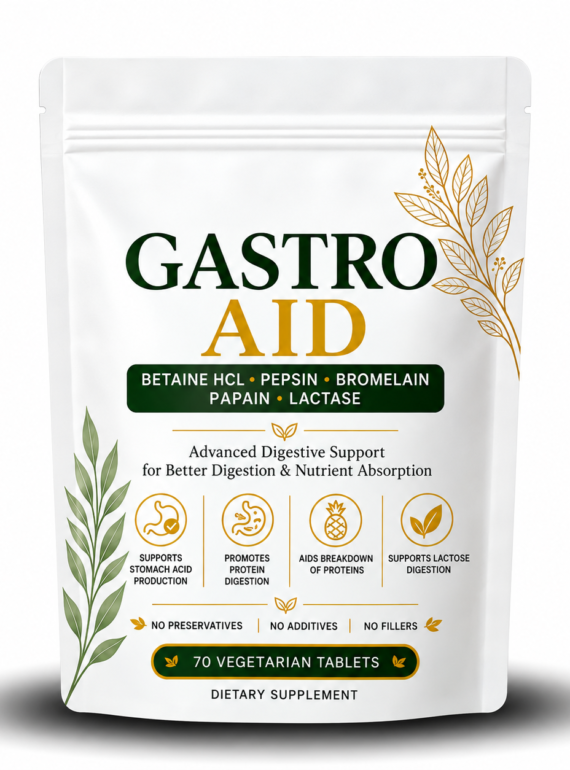
is an advanced digestive-support supplement formulated with Betaine HCl, Pepsin, Bromelain, Papain, and Lactase to support stomach acid production, protein and lactose digestion, reduce bloating and stomach discomfort, and promote healthy digestive function.
Description
Description
GASTRO AID
Gastro Aid is an advanced digestive-support dietary supplement formulated with Betaine HCl, Pepsin, Bromelain, Papain, and Lactase. It is designed to support stomach acid production, protein digestion, protein breakdown, lactose digestion, and overall digestive function.
Key Benefits
- Supports healthy stomach acid production
- Promotes protein digestion
- Aids protein breakdown
- Supports lactose digestion
- Helps prevent bloating and stomach discomfort
- Helps prevent constipation
- Supports healthy digestive function
- Supports better nutrient absorption
- Supports efficient digestion of protein-rich meals
- Helps prevent foamy urine associated with protein in the urine (Protein showing up in the urine indicate kidney damage or impaired kidney function)
How to Use
- Take 1–2 capsules after each meal.
- Swallow with enough water to ensure the capsules pass comfortably and do not get stuck in the throat.
Note
- Avoid drinking water immediately after meals to avoid diluting the digestive enzymes.
- Intentionally drink at least 75 cl of water before each meal to avoid being thirsty after eating.
Product Details
- 70 Vegetarian Capsules
- No Preservatives
- No Additives
- No Fillers
- Dietary Supplement
Gastro Aid -Frequently Asked Questions
1. What are digestive enzymes?
Digestive enzymes are proteins produced by the body that help break down food into smaller nutrients that can be digested and absorbed. Different enzymes work on different components of food, including proteins, carbohydrates, fats and lactose.
2. How do digestive enzymes work?
Digestive enzymes break food into smaller components so the body can digest and absorb nutrients more efficiently.
3. When should I take digestive enzymes—before, during, or after meals?
For Gastro Aid, take 1–2 capsules after each meal, as directed.
4. Can I take digestive enzymes with every meal?
Yes. Gastro Aid is recommended at 1–2 capsules after each meal.
5. Can digestive enzymes help with bloating and gas?
Digestive enzymes can support the breakdown of certain foods and may help with digestive discomfort such as bloating and gas, particularly when the discomfort is related to difficulty digesting specific foods.
6. Can digestive enzymes help with stomach discomfort after eating?
They may support digestion and help reduce digestive discomfort associated with difficulty breaking down food.
7. Can digestive enzymes help with constipation?
Gastro Aid supports healthy digestive function and is formulated to help prevent constipation.
8. What does Lactase do?
Lactase is an enzyme that helps break down lactose, the natural sugar found in milk and dairy products.
9. Can digestive enzymes help with lactose intolerance?
Lactase supplements can help people who have difficulty digesting lactose by providing the enzyme needed to break down lactose.
10. What is the difference between digestive enzymes and probiotics?
Digestive enzymes help break down food, while probiotics are live microorganisms that support the gut microbiome.
11. Can digestive enzymes be taken daily?
The frequency depends on the specific supplement. For Gastro Aid, follow the recommended use of 1–2 capsules after each meal.
12. What are the possible side effects of digestive enzymes?
Some people may experience digestive symptoms such as gas, nausea or stomach discomfort when using enzyme supplements.
13. Who should take digestive enzymes?
Digestive enzyme supplements may be useful for people who have difficulty digesting certain foods or who need additional support with specific digestive enzymes.
14. How long does it take for digestive enzymes to work?
Digestive enzymes work during the digestive process, so they are generally taken in connection with meals rather than being used as a supplement that needs to build up in the body over time.
15. Can digestive enzymes help digest protein?
Yes. Gastro Aid contains Pepsin, Bromelain and Papain, enzymes that support protein digestion and breakdown.
16. What happens if the body doesn’t produce enough digestive enzymes?
Insufficient digestive enzymes can make it harder to properly digest certain foods and may contribute to symptoms such as bloating, gas, abdominal discomfort or diarrhea, depending on which enzyme is lacking.
17. Can digestive enzymes be taken with other supplements or medication?
This depends on the specific medication or supplement and the ingredients in the enzyme product. If you take prescription medication or several supplements, consult a healthcare professional before combining them.
18. What ingredients are in Gastro Aid?
Gastro Aid contains Betaine HCl, Pepsin, Bromelain, Papain and Lactase.
19. How do I take Gastro Aid?
Take 1–2 capsules after each meal. Swallow with enough water to ensure the capsules pass comfortably and do not get stuck in the throat.
20. How much water should I drink before eating?
Intentionally drink at least 75 cl of water before each meal to help avoid being thirsty after eating.
21. How many capsules are in Gastro Aid?
Each pack contains 70 vegetarian capsules.
22. Is Gastro Aid vegetarian?
Yes. Gastro Aid comes in vegetarian capsules.
23. Does Gastro Aid contain preservatives, additives or fillers?
No. Gastro Aid contains no preservatives, additives or fillers.
24. Can I take Gastro Aid digestive enzymes if I have an ulcer?
Yes. You can take Gastro Aid if you have an ulcer, but make sure you only take it after a heavy meal.
25. How can Gastro Aid digestive enzymes help me as a heavy weight lifter?
Gastro Aid supports the digestion and breakdown of protein-rich meals, making it useful for heavy weight lifters who consume larger, protein-dense meals. This helps with fast muscle repair and build-up. Its Pepsin, Bromelain and Papain support protein digestion, while Betaine HCl supports stomach acid production and Lactase support milk digestion.
26. Can Gastro Aid help me digest large, high-protein meals?
Yes. Gastro Aid contains Pepsin, Bromelain and Papain, which support the breakdown and digestion of protein.
27. Can Gastro Aid help with bloating after eating a high-protein meal?
Yes. Gastro Aid supports protein digestion and overall digestive function, which can be useful when large or protein-rich meals leave you feeling bloated or uncomfortable.
28. Can Gastro Aid help my body digest protein from meat, eggs, fish and other protein-rich foods?
Yes. Its protein-digesting enzymes support the breakdown of proteins from foods such as meat, eggs and fish.
29. Can I take Gastro Aid after a protein-heavy meal?
Yes. Take 1–2 capsules after the meal, according to the recommended use.
30. Can Gastro Aid help when I feel too full after eating a large meal?
Gastro Aid supports digestion and the breakdown of food, making it suitable for people who regularly consume large meals.
31. Can Gastro Aid help with digestive discomfort from eating more food while bulking?
Yes. Gastro Aid supports digestion during periods when you are consuming larger meals and more calories.
32. Can Gastro Aid support digestion when I am on a high-protein diet?
Yes. Its formulation specifically includes enzymes that support protein digestion and breakdown.
33. Can Gastro Aid help me digest protein shakes and other protein-rich drinks?
Yes. Gastro Aid supports protein digestion. If a protein shake contains lactose, its Lactase component also supports lactose digestion.
34. Can Gastro Aid help with bloating caused by protein shakes?
It may help when the discomfort is related to difficulty digesting the components of the shake. Lactase can be particularly relevant when lactose is involved.
35. Can I take Gastro Aid after my post-workout meal?
Yes. You can take 1–2 capsules after your post-workout meal.
36. Can I take Gastro Aid with my pre-workout meal?
Yes. Gastro Aid can be taken after a meal according to its recommended dosage.
37. Can Gastro Aid help me digest more efficiently while I am bulking?
Gastro Aid supports the digestive process, particularly the breakdown of protein. However, it does not replace adequate calories, protein, hydration or a balanced diet needed for muscle growth.
38. Can Gastro Aid support digestion during a calorie-surplus diet?
Yes. It can support digestion when you are consuming larger quantities of food as part of a calorie-surplus diet.
39. Can Gastro Aid help if I eat several large meals throughout the day?
Yes. The recommended use is 1–2 capsules after each meal, including larger meals.
40. Can Gastro Aid be used when following a high-protein bodybuilding diet?
Yes. Its protein-digesting enzymes make it particularly relevant to people who regularly consume protein-rich meals.
41. Can Gastro Aid help with stomach discomfort when increasing my protein intake?
It supports protein digestion and overall digestive function, which may help when digestive discomfort is related to difficulty digesting meals.
42. Can Gastro Aid help digest dairy-based protein such as whey?
Yes. Gastro Aid contains Lactase, which helps break down lactose. This may be useful when lactose in a dairy-based protein product contributes to digestive symptoms.
43. Why does Gastro Aid contain Lactase if I consume dairy or whey protein?
Lactase helps break down lactose, the sugar found in milk and many dairy products. This can be particularly relevant for people who have difficulty digesting lactose.
44. Can Gastro Aid help me digest protein without feeling excessively bloated?
Gastro Aid supports protein digestion and may help reduce digestive discomfort associated with difficulty digesting protein-rich meals.
45. Does better protein digestion mean my body will absorb more protein?
Efficient protein digestion is necessary for the body to access amino acids from dietary protein. However, taking a digestive enzyme supplement does not automatically mean that you will absorb more protein than your body would otherwise absorb.
46. Can Gastro Aid replace digestive enzymes naturally produced by my body?
Gastro Aid provides supplemental digestive enzymes, but it should not be viewed as a replacement for the digestive enzymes naturally produced by your body. Your stomach, pancreas and small intestine naturally produce digestive enzymes.
47. Can I take Gastro Aid every day while following a bodybuilding diet?
Gastro Aid should be taken according to its recommended dosage: 1–2 capsules after each meal. If you have a medical condition or take medications, speak with a healthcare professional before using digestive-enzyme supplements regularly.
48. Can Gastro Aid be taken with protein supplements and other bodybuilding supplements?
Gastro Aid can be taken with protein-containing meals or shakes according to its directions. If you take medications or multiple supplements, check with a healthcare professional because supplement interactions can occur.
49. Is Gastro Aid suitable for people who eat high-protein meals regularly?
Gastro Aid is formulated to support the digestion and breakdown of protein, making it suitable for people who regularly consume protein-rich meals.
50. How does Gastro Aid support digestion when I am eating significantly more food than usual?
When you’re eating larger meals, particularly during bulking, Gastro Aid provides Betaine HCl, Pepsin, Bromelain, Papain and Lactase to support different aspects of digestion, including stomach acid production, protein breakdown and lactose digestion.

Gastro Aid Digestive Enzymes
Related products

ClearFix Acne Herbal Tea

Acid Balance Digestive Enzymes


Only logged in customers who have purchased this product may leave a review.
0 Reviews
There are no reviews yet.